
Most people who give up on learning an instrument haven’t lost interest in music. They just picked the wrong instrument for their life.
Before you spend a cent, it helps to know what each choice really demands. Here are ten approachable musical instruments, grouped by family, with an honest look at what beginners can expect.
Stringed Instruments Reward Patience
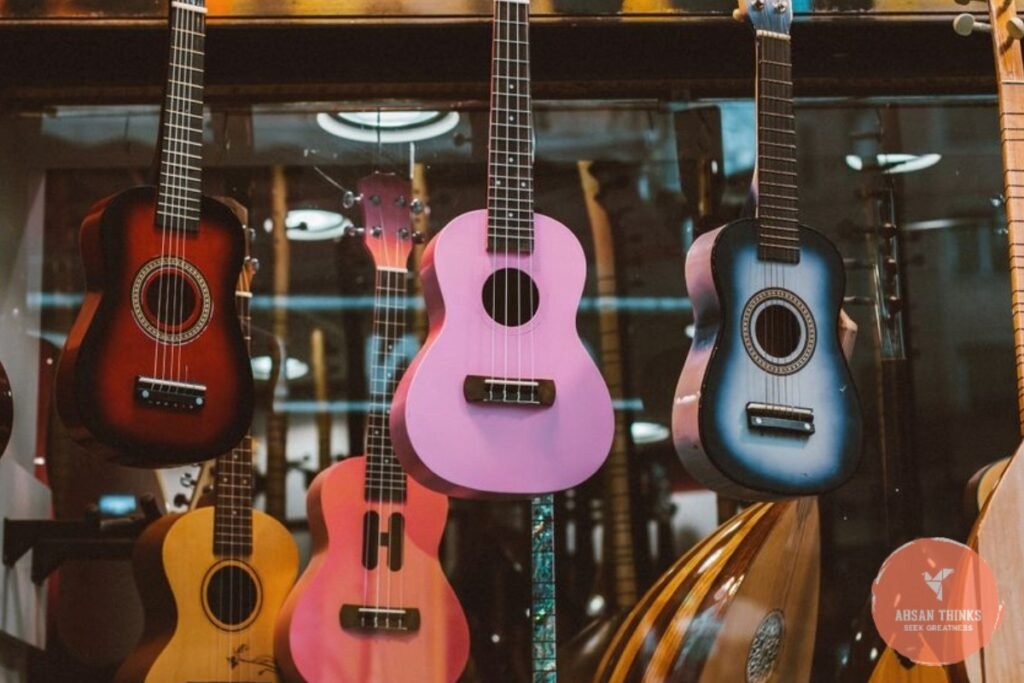
Among stringed musical instruments, the acoustic guitar is still the default first pick, and for good reason. A beginner can play a few simple chords within a couple of weeks, and a solid starter model doesn’t cost much. The ukulele is even friendlier, with four soft nylon strings that go easy on sore fingertips.
The violin is the tough one. It has no frets, so your ear has to do the work they would normally do, and the first few months can sound rough. Stick with it and the payoff is real. Then there’s the double bass instrument, the tall one that anchors jazz combos and orchestras. It suits anyone who enjoys a supporting role, but plans ahead for storage and transport.
Wind and Brass Demand Breath Control
Wind musical instruments like the flute and clarinet depend on steady breath and precise finger placement. The flute makes a sound quickly, though a clean, even tone takes practice. The clarinet is fussier, since the reed and mouth shape matter a great deal, but its warm voice makes the effort worthwhile.
Brass musical instruments are louder and more physical. The trumpet is compact and a staple of school bands, while the trombone’s slide trains your ear to find pitch without any shortcuts. Expect tired lips at first. That’s normal, and it passes.
Rhythm and Keys
If groove is what pulls you in, musical instrument percussion starts with the drum kit. Few things build timing and coordination as quickly. Practice pads and electronic kits keep the noise down, which your neighbors will appreciate.
The piano rounds out the list, and it may be the best teacher of the bunch. The keyboard layout makes music theory easy to see, so ideas that seem abstract on paper click into place. A weighted digital keyboard costs a fraction of an acoustic piano and still builds proper technique.
Choosing the One That Sticks
Think about three things: your budget, the space you have, and the music you actually listen to. Wanting to play a certain sound is what gets you through the frustrating weeks. If you’re unsure, rent the larger instruments first and buy the smaller ones outright. Then set a modest goal, like playing one full song in three months, and let your progress tell you whether to upgrade.
FAQs
1. Which instrument is easiest for a complete beginner?
The ukulele and the keyboard usually win, thanks to simple layouts and quick early results.
2. Should I rent or buy my first instrument?
Rent larger or pricier ones such as the violin or trombone. Cheaper options like the ukulele are fine to buy outright.
3. How long until I can play a simple song?
With steady practice, most people manage a basic tune within four to eight weeks.
4. Are adults at a disadvantage compared with kids?
Not really. Adults often progress faster at the start because they practice with clearer purpose.
5. How much should I practice each day?
Twenty to thirty focused minutes a day beats one long session on the weekend.